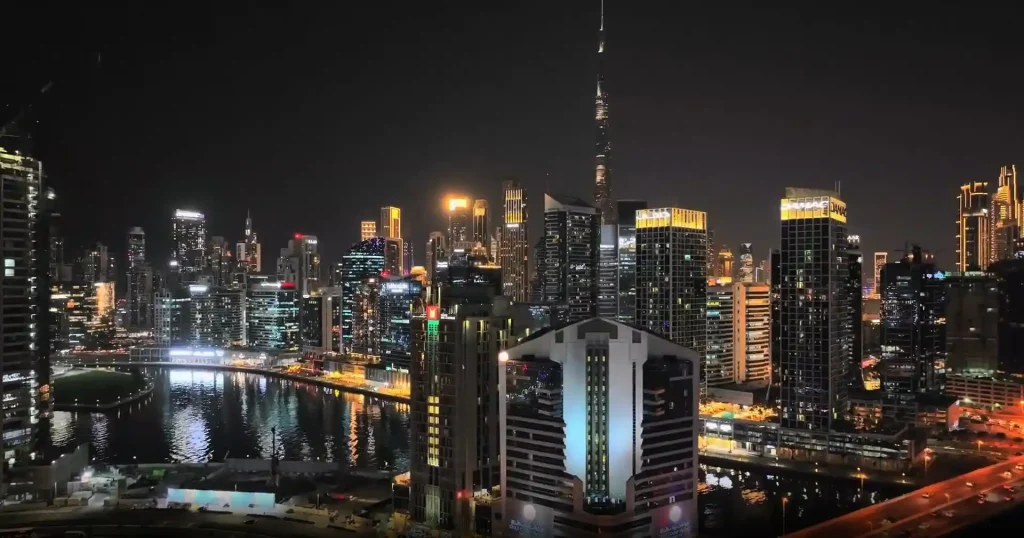
Dubai, a city of superlatives, is the most populous city in the United Arab Emirates and the capital of the Emirate of Dubai. Its dynamic evolution from a small trading and pearling settlement into a global hub for business, tourism, and innovation has captured worldwide attention. The city is known for its spectacular skyline, ambitious megaprojects, vibrant multicultural atmosphere, and robust, diversified economy
History
Early settlement: Founded as a fishing and pearling village in the early 18th century, Dubai’s story began with the Bani Yas tribe, led by the Al Maktoum family, settling along the Dubai Creek in 1833. The family, still the ruling dynasty today, established the city’s trade-friendly policies.
Trade hub: By the early 20th century, Dubai had become a thriving regional port, attracting foreign merchants, largely due to its free-trade status.
Discovery of oil: The 1966 discovery of oil fueled a construction and development boom, funding key infrastructure projects like the expansion of Dubai International Airport and the construction of Port Rashid.
Modernization and union: Under the visionary leadership of Sheikh Rashid bin Saeed Al Maktoum, Dubai pushed forward with development. In 1971, it became a founding member of the United Arab Emirates, with its rulers playing a pivotal role in the federation’s establishment.
Economy
Diversified success: Though built on early oil revenues, Dubai’s modern economy is overwhelmingly non-oil based, with trade, tourism, aviation, financial services, and real estate as its main pillars. The oil sector now accounts for less than 1% of the emirate’s GDP.
Trade and finance: Dubai operates some of the world’s largest ports and has a busy international air cargo hub. It is home to the Dubai International Financial Centre (DIFC), an independent legal jurisdiction operating under a separate commercial and civil framework based on English common law.
Future-focused strategies: Strategic plans, like the Dubai Economic Agenda D33, aim to further diversify the economy, boost foreign trade, and increase foreign direct investment. The city is also a leader in fintech and green energy initiatives.
Real estate: The real estate and construction sectors are a major economic force, known for iconic megaprojects such as the Burj Khalifa and man-made islands.
Culture and landmarks
Architectural feats: Dubai’s ambitious and futuristic architecture has made its skyline recognizable worldwide. Notable structures include the
Burj Khalifa
, the sail-shaped
Burj Al-ʿArab hotel
, and the architectural wonder of the
Dubai Frame
.
Artificial islands: The city’s coast is famously defined by man-made islands such as
Palm Jumeirah
and
The World Islands
, which host luxury residences and resorts.
Historical areas: To experience traditional culture, visitors can explore areas like the
Al Fahidi Historical Neighbourhood
, the
Dubai Museum
inside the historic Al Fahidi Fort, and the vibrant gold, textile, and spice souks along the Dubai Creek.
Entertainment and leisure: Beyond its striking buildings, Dubai is packed with attractions, including the massive
Dubai Mall
, the seasonal
Global Village
, and indoor ski slopes.
Multiculturalism: With a population where a vast majority are expatriates, Dubai is a cosmopolitan hub where diverse communities coexist, making English a common language.
Geography and climate
Desert environment: Situated within the Arabian Desert, Dubai has a sandy, desert terrain. The climate is hot and humid, especially in the prolonged summer months, while winters are mild and pleasant.
Coastal location: The city lies along the Persian Gulf coast, with the Dubai Creek bisecting the city into the old districts of Bur Dubai and Deira